|
Our host has offered to upgrade our server for free. Better yet, the new server will be 10 dollars cheaper a month. Needless to say, we're moving servers. Image Submissions are disabled until we finish the move, which hopefully will be wrapped up by the end of Tuesday. Other things should remain online since the mySQL tables are pretty portable. We'll keep you posted to the changes, and if anything should go awry, our emergency blog will have the information you're probably going to be looking for. We don't anticipate any significant downtime, but it's always good to be prepared.
Thanks for supporting us, and we hope to see you on the flip side of the server move.
I currently have my game collection partnered with some of our computer/filing/storage/odds & ends in our house. And to top it off there is no wall to enclose the room. Its not my ideal set up.
Today we finally got a reasonable offer on our Trailer. The person just has to wait for a response from the bank to see if they can get approved for the loan. If everything goes well we will be able to purchase our first home.
This will finally allow me to have the space to have a room dedicated to my hobby/collection. Wish me luck!!!
|  History of the Video Game Console History of the Video Game Console
-- The 1970s -- |
The 1970s marked the beginning of home video gaming as we know it today. Ralph Baer, uniformly known as the father of the video game console, created and developed the infamous Brown Box, which would later become the revolutionary Magnavox Odyssey. Few could honestly admit that this humble beginning would result in the multi-billion dollar market of today. The advent of the microprocessor proved to be the key.
While some focused on mastering their dance moves to impress at the local Disco, others devoted their time in developing the first microprocessor and the C programming language. Their efforts resulted in the birth of modern computing. For once, the electronic components that once occupied more than 15,000 square feet of warehouse space was made available to the general public at a reasonably affordable rate in the form of the home computer. This technological jump enabled the creation of the home video game console. Many companies entered into this fledging market hoping to capitalize on this newly developed technology - some with greater success than others. The decade spawned myriads of PONG systems and also introduced us to a new world - programmable cartridge based systems (which this article focusing upon). Gone were the days of the dedicated console and ushered in were the true parents of today's hardware. Fairchild Semiconductors was the first to introduce us to this advancement in the form of their Video Entertainment Center (Channel F), but Atari ended up being the king of this era with the release of the Video Computer System (2600). The decade marked another significant feat - the beginnings of globalization within the gaming community. Not only were systems released in various countries, but the first BBS (bulletin board system) enabled gamers from around the world to share their video game experiences via text forums. The following takes a quick snapshot of each main console (or technology) that was released during this decade.
| | 1972 - Magnavox Odyssey |      | 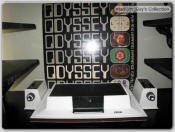
| The granddaddy of the home video game console. There were no processors in this system - just a series of transistors, resistors and capacitors. Pin-outs were contained on the individual game cards and graphical output was produced with white blocks against a black background. Plastic colored overlays were provided to put over your television screen to enhance the graphics a bit. | 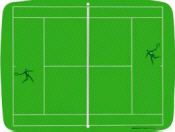 | Fun Fact: Consumers were told that this system would only work with Magnavox brand televisions, which was completely inaccurate. | | | 1975 - PC-50X Family |    | 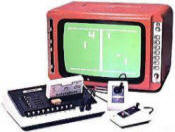
| Improvements to the initial General Instruments AY-3-8500 (PONG) chip resulted in more game variations on this classic format. Manufacturers wised up made a breakthrough - include the new chip(s) on cartridges. This eliminated the need to develop a new system for every chip and significantly drove down cost. There were a total of eight chip variations that were produced and the pin-out cartridges contained up to 10 games. | 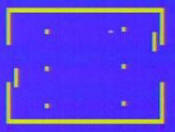 | Fun Fact: The initial models still only output the games in black and white. Later technological enhancements added color (4 colors) and sound. | | | 1976 - Fairchild Video Entertainment System (Channel F) |   | 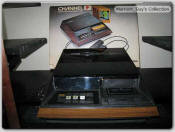
| The Fairchild Video Entertainment System (later changed to Channel F) was the first console to feature programmable cartridges. Featuring built-in games, 8' controller cords and being the first to utilize microprocessor technology, the Channel F was quite innovative at the time of its release. The following year the Atari Video Computer System (specifically named this way to directly compete against Fairchild's similarly entitled system) put the stake through this fledgling console's heart. | 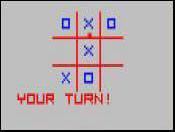 | Fun Fact: Andrew Grove and Robert Noyce, two employees of Fairchild Semiconductors, would eventually start a new company that some of you may have heard of: Intel. | | | 1976 - RCA Studio II | | 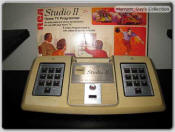
| RCA lost the race to Fairchild Semiconductors to produce the first programmable console available to the public. The Studio II lacked controllers and relied upon the built-in numeric keypad to control the action. Another glaring fault of this system is the black and white video output. Though it has been proven that a few games were designed for color, RCA's rush to get this product to market resulted in the absence of this basic feature. | 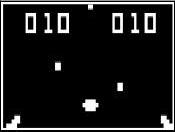 | Fun Fact: Ralph Baer, the designer of the Odyssey, originally approached RCA to be the initial manufacturer of his new system. RCA declined and the rest is a bad RCA memory. | | | 1976 - 1292 APVS Family | | 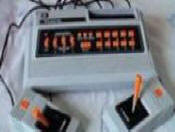
| The 1292 Advanced Programmable Video System (APVS) family of consoles was basically Europe's answer to the Fairchild Channel F. The initial developer, a German company called Radofin, was one of the first companies to license programmable hardware technology to many other companies (much like The 3DO Company did with Panasonic and Goldstar). This strategy produces extremely positive results as nearly 25 different models were produced by various manufacturers. | 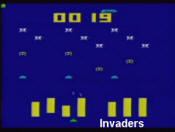 | Fun Fact: The Emerson Arcadia, released in 1982, was first believed to be a 1292 clone since it uses the same Signetics CPU. In fact, the Arcadia's coprocessor was an upgrade. | | | 1977 - Atari Video Computer System (2600) |  | 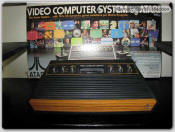
| Atari's mother ship set the standard for programmable based video game systems in the 1970s. Code named 'Stella' (after one of the designer's bicycle), the 2600 was the first system to come close to delivering an arcade experience in the comforts of one's living room. This would not have been possible if it wasn't for Warner Communication. Atari Inc., experiencing significant cash flow problems, approached the media giant who eventually purchased the company and completed development of this classic system. | 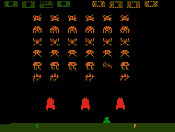 | Fun Fact: In 1982, Atari changed the name of this console in Atari 2600 due to the fact that their newly released system as dubbed the Atari 5200. | | | 1977 - Bally Home Library Computer (Professional Arcade Astrocade) | | 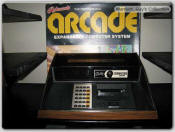
| The Home Library Computer was designed by Bally's video game division Midway (creators of the infamous Mortal Kombat series). The technology was quite impressive for the time and rivaled the popular Atari 2600 in terms of graphical output. The most innovative facet of this system is its multi-functional 'pistol' controller, featuring a trigger action button and a multi-directional joystick know that could also serve as a paddle controller. Bally suffered from lack of arcade license support (Atari ate these up) and eventually could not compete. | 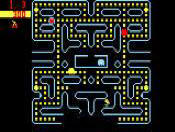 | Fun Fact: Though the cartridges resemble audio cassettes, they are in fact just regular carts. They were designed this way to prevent cart damage (they do not protrude at all). | | | 1978 - Magnavox Odyssey 2 Philips VideoPac | | 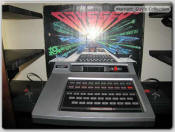
| The Odyssey 2 was the first console to incorporate a full alpha-numeric keyboard along with its initial hardwired joystick controllers. Though technically inferior to the rival Atari 2600, the Odyssey 2 did feature flicker-free graphics, a point its competitor could not make. This console was very successful and was manufactured throughout the world by notable companies including Philips, Radiola and Schneider. This was also the first console to actively market itself as an educational toll in addition to its programming ability. | 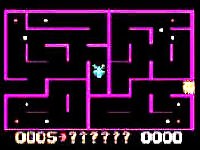 | Fun Fact: Almost all of the games for were written by one person - Ed Averett, a former Intel employee who worked closely in the development of the O2's Intel 4040 processor. | | | 1978 - Interton VC-4000 |   | 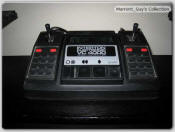
| It is undetermined if the German based company Interton developed this system on its own, or if they licensed the 1292 APVS technology from Radofin. There are minor differences in the cart size and programming, but few would argue that it is anything but a sibling of the 1292 APVS. The VC-4000 was mildly successful, with models released in Europe, Australia and Argentina among others. | 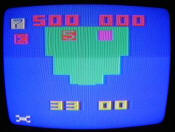 | Fun Fact: The Interton VC-4000 is considered to be in the 1292 APVS Family of consoles though there are some minor compatibility differences in cart size and game releases. | | | 1978 - APF Imagination Machine | | 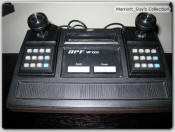 | APF Electronics jumped into the video game craze with their release of the APF-M1000 console in 1978. This 8-bit system was designed to compete against the heavyweight Atari 2600. It did not even come close. But what makes this system unique is the addition of the APF MP-10 computer add-on that was released in 1979. The base console could be docked into this module to create a hybrid computer, one of the first of its kind. | 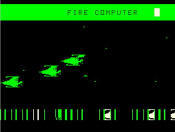 | Fun Fact: Although the APF IM game library only contains 15 official releases, many more applications were available made available by its extremely active home-brew community. | | 1979 - Bandai Super Vision 8000 |  | 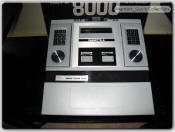 | The Bandai Super Vision 8000 debuted in 1979 and was the very first programmable game cartridge system released in Japan. This timeline (1979) and notoriety (initial entry and the developer, Bandai) may be a surprise to some simply due to the fact that Japan has been a leader in video game technology for some time, with big hitters Nintendo and Sega in the fold. Though technically superior to the competition, the high price tag ($1.3K in USD comparable in 1979) quickly doomed this console after just one year of production. | 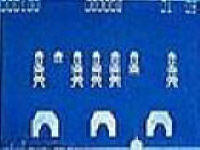 | Fun Fact: Due to its controller design, some feel that this is a clone of the Intellivision, when in fact the Super Vision 8000 was released prior to Mattel's system. | | | 1979 - Mattel Intellivision | | 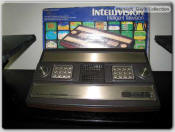 | The chief challenger to the Atari 2600, the Intellivision sported new disc controllers (either loved or hated by gamers) and superior graphical and auditorial capabilities. With few attractive arcade or movie licenses available to them due to Atari's aggressive nature in this field, Mattel had to rely upon lesser known titles but did produce an innovative add-on - the Atari 2600 Adaptor. The library of compatible games now more tripled for this system and the Intellivision would continue to sell into the 1990s. | 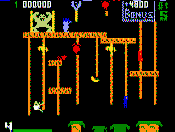 | Fun Fact: After possibly copying their controller design of the Super Vision 8000, Mattel approached Bandai to be the exclusive distributor of the Intellivision in Japan. | | |
The 1970s ended up being one of the most influential decades in the history of video gaming hardware. Technological breakthroughs abounded and successes (and at times failures) of companies that participated during this time helped inspire behemoths like Nintendo and Sega to develop into the gaming force they would become in the following decade. Dancing was definitely a driving force during this time period - thank goodness the programmers fingers and not the John Travolta wannabes ended up standing the test of time.
|
| History of the Video Game Console
-- The 1970s -- |
The 1970s marked the beginning of home video gaming as we know it today. Ralph Baer, uniformly known as the father of the video game console, created and developed the infamous Brown Box, which would later become the revolutionary Magnavox Odyssey. Few could honestly admit that this humble beginning would result in the multi-billion dollar market of today. The advent of the microprocessor proved to be the key.
While some focused on mastering their dance moves to impress at the local Disco, others devoted their time in developing the first microprocessor and the C programming language. Their efforts resulted in the birth of modern computing. For once, the electronic components that once occupied more than 15,000 square feet of warehouse space was made available to the general public at a reasonably affordable rate in the form of the home computer. This technological jump enabled the creation of the home video game console. Many companies entered into this fledging market hoping to capitalize on this newly developed technology - some with greater success than others. The decade spawned myriads of PONG systems and also introduced us to a new world - programmable cartridge based systems. Gone were the days of the dedicated console and ushered in were the true parents of today's hardware. Fairchild Semiconductors was the first to introduce us to this advancement in the form of their Video Entertainment Center (Channel F), but Atari ended up being the king of this era with the release of the Video Computer System (2600). The decade marked another significant feat - the beginnings of globalization within the gaming community. Not only were systems released in various countries, but the first BBS (bulletin board system) enabled gamers from around the world to share their video game experiences via text forums. The following takes a quick snapshot of each main console (or technology) that was released during this decade.
| | 1972 - Magnavox Odyssey | |
| The granddaddy of the home video game console. There were no processors in this system - just a series of transistors, resistors and capacitors. Pin-outs were contained on the individual game cards and graphical output was produced with white blocks against a black background. Plastic colored overlays were provided to put over your television screen to enhance the graphics a bit. | | Fun Fact: Consumers were told that this system would only work with Magnavox brand televisions, which was completely inaccurate. | | | 1975 - PC-50X Family | |
| Improvements to the initial General Instruments AY-3-8500 (PONG) chip resulted in more game variations on this classic format. Manufacturers wised up made a breakthrough - include the new chip(s) on cartridges. This eliminated the need to develop a new system for every chip and significantly drove down cost. There were a total of eight chip variations that were produced and the pin-out cartridges contained up to 10 games. | | Fun Fact: The initial models still only output the games in black and white. Later technological enhancements added color (4 colors) and sound. | | | 1976 - Fairchild Video Entertainment System (Channel F) | |
| The Fairchild Video Entertainment System (later changed to Channel F) was the first console to feature programmable cartridges. Featuring built-in games, 8' controller cords and being the first to utilize microprocessor technology, the Channel F was quite innovative at the time of its release. The following year the Atari Video Computer System (specifically named this way to directly compete against Fairchild's similarly entitled system) put the stake through this fledgling console's heart. | | Fun Fact: Andrew Grove and Robert Noyce, two employees of Fairchild Semiconductors, would eventually start a new company that some of you may have heard of: Intel. | | | 1976 - RCA Studio II | |
| RCA lost the race to Fairchild Semiconductors to produce the first programmable console available to the public. The Studio II lacked controllers and relied upon the built-in numeric keypad to control the action. Another glaring fault of this system is the black and white video output. Though it has been proven that a few games were designed for color, RCA's rush to get this product to market resulted in the absence of this basic feature. | | Fun Fact: Ralph Baer, the designer of the Odyssey, originally approached RCA to be the initial manufacturer of his new system. RCA declined and the rest is a bad RCA memory. | | | 1976 - 1292 APVS Family | |
| The 1292 Advanced Programmable Video System (APVS) family of consoles was basically Europe's answer to the Fairchild Channel F. The initial developer, a German company called Radofin, was one of the first companies to license programmable hardware technology to many other companies (much like The 3DO Company did with Panasonic and Goldstar). This strategy produces extremely positive results as nearly 25 different models were produced by various manufacturers. | | Fun Fact: The Emerson Arcadia, released in 1982, was first believed to be a 1292 clone since it uses the same Signetics CPU. In fact, the Arcadia's coprocessor was an upgrade. | | | 1977 - Atari Video Computer System (2600) | |
| Atari's mother ship set the standard for programmable based video game systems in the 1970s. Code named 'Stella' (after one of the designer's bicycle), the 2600 was the first system to come close to delivering an arcade experience in the comforts of one's living room. This would not have been possible if it wasn't for Warner Communication. Atari Inc., experiencing significant cash flow problems, approached the media giant who eventually purchased the company and completed development of this classic system. | | Fun Fact: In 1982, Atari changed the name of this console in Atari 2600 due to the fact that their newly released system as dubbed the Atari 5200. | | | 1977 - Bally Home Library Computer (Professional Arcade Astrocade) | |
| The Home Library Computer was designed by Bally's video game division Midway (creators of the infamous Mortal Kombat series). The technology was quite impressive for the time and rivaled the popular Atari 2600 in terms of graphical output. The most innovative facet of this system is its multi-functional 'pistol' controller, featuring a trigger action button and a multi-directional joystick know that could also serve as a paddle controller. Bally suffered from lack of arcade license support (Atari ate these up) and eventually could not compete. | | Fun Fact: Though the cartridges resemble audio cassettes, they are in fact just regular carts. They were designed this way to prevent cart damage (they do not protrude at all). | | | 1978 - Magnavox Odyssey 2 Philips VideoPac | |
| The Odyssey 2 was the first console to incorporate a full alpha-numeric keyboard along with its initial hardwired joystick controllers. Though technically inferior to the rival Atari 2600, the Odyssey 2 did feature flicker-free graphics, a point its competitor could not make. This console was very successful and was manufactured throughout the world by notable companies including Philips, Radiola and Schneider. This was also the first console to actively market itself as an educational toll in addition to its programming ability. | | Fun Fact: Almost all of the games for were written by one person - Ed Averett, a former Intel employee who worked closely in the development of the O2's Intel 4040 processor. | | | 1978 - Interton VC-4000 | |
| It is undetermined if the German based company Interton developed this system on its own, or if they licensed the 1292 APVS technology from Radofin. There are minor differences in the cart size and programming, but few would argue that it is anything but a sibling of the 1292 APVS. The VC-4000 was mildly successful, with models released in Europe, Australia and Argentina among others. | | Fun Fact: The Interton VC-4000 is considered to be in the 1292 APVS Family of consoles though there are some minor compatibility differences in cart size and game releases. | | | 1978 - APF Imagination Machine | | | APF Electronics jumped into the video game craze with their release of the APF-M1000 console in 1978. This 8-bit system was designed to compete against the heavyweight Atari 2600. It did not even come close. But what makes this system unique is the addition of the APF MP-10 computer add-on that was released in 1979. The base console could be docked into this module to create a hybrid computer, one of the first of its kind. | | Fun Fact: Although the APF IM game library only contains 15 official releases, many more applications were available made available by its extremely active home-brew community. | | 1979 - Bandai Super Vision 8000 | | | The Bandai Super Vision 8000 debuted in 1979 and was the very first programmable game cartridge system released in Japan. This timeline (1979) and notoriety (initial entry and the developer, Bandai) may be a surprise to some simply due to the fact that Japan has been a leader in video game technology for some time, with big hitters Nintendo and Sega in the fold. Though technically superior to the competition, the high price tag ($1.3K in USD comparable in 1979) quickly doomed this console after just one year of production. | | Fun Fact: Due to its controller design, some feel that this is a clone of the Intellivision, when in fact the Super Vision 8000 was released prior to Mattel's system. | | | 1979 - Mattel Intellivision | | | The chief challenger to the Atari 2600, the Intellivision sported new disc controllers (either loved or hated by gamers) and superior graphical and auditorial capabilities. With few attractive arcade or movie licenses available to them due to Atari's aggressive nature in this field, Mattel had to rely upon lesser known titles but did produce an innovative add-on - the Atari 2600 Adaptor. The library of compatible games now more tripled for this system and the Intellivision would continue to sell into the 1990s. | | Fun Fact: After possibly copying their controller design of the Super Vision 8000, Mattel approached Bandai to be the exclusive distributor of the Intellivision in Japan. | | |
The 1970s ended up being one of the most influential decades in the history of video gaming hardware. Technological breakthroughs abounded and successes (and at times failures) of companies that participated during this time helped inspire behemoths like Nintendo and Sega to develop into the gaming force they would become in the following decade. Dancing was definitely a driving force during this time period - thank goodness the programmers fingers and not the John Travolta wannabes ended up standing the test of time.
|
Im not in an overly productive mood this week so I'm going with an easy blog entry this time. Best Mega Man weapons. Im not going to include the Rush/Item upgrades because I feel they deserve their own spotlight at a later time.
10 - Charge Kick
This move is obtained from Charge Man (gasp) and seems like it does nothing at first. I played around trying to get something to happen, but it just seemed useless. I was mashing the fire button and jumping around like an idiot. Finally I decided to do a slide and like magic I had a powerful sliding attack. This move makes it onto the list because its got style, its fun and its very unique compared to a lot of the other weapons that just get rehashed over and over throughout the series. Its not all that useful, but who cares about that when your Charge Kicking Wave Man in the face.
9 - Top Spin
This is possibly the only other move that can be compared to the Charge Kick. Its probably also the most powerful move in any Mega Man game when used on the right foe. Mega Man sticks out his arms and spins around..... yes, like a 3 year old. Its kinda scary to use at times because you have to get so close to your enemies and often take damage while inflicting it, but its satisfying to beat Shadow Man or the last boss with only 1 or 2 hits from the mighty Top Spin.
8 - Hyper Bomb
The Hyper Bomb is quite useless for many levels, but the times it does come in handy can't be emulated by any other weapons in the game. It really shines while traversing Dr. Wily's Fortress. Dropping you bomb down to clear out enemies instead of jumping down all guns blazing helps to save you alot of health during this fortress.
7 - Magnet Missle
This is probably the most fun weapon to use period. As long as you are facing the right direction you pretty much cant miss your target. The Magnet Missle shoots forward until it has an enemy either over top of it or below in and then dives (or rises?) straight for that target. Because of the lack of aim (or skill) require to use it you can just keep running through the level shooting away without a care in the world.
6 - Search Snake
This handy little weapon is pretty weak, but as long as you collect enough powerups to keep it full you'll be laughing. It shoots out a little tadpole (common they dont really look like snakes) that race across the ground and climbs up and around obstacles until it hits something or leaves the screen. Its very helpful when trying to conserve your life meter and hurting enemies from a distance.
5 - Leaf Shield
Another handy weapon when trying to conserve health, but this one is helpful in a lot more situations. It puts a protective barrier of leaves around Mega Man and can also be shoot forward as a projectile. Uses a pretty large amount of power to use, but as long as your picking up powerups it shouldnt be to much of a problem.
4 - Time Stopper
This move stops everything on the screen except your little blue man. Very useful in any level that has a difficult spot to overcome that is full of enemies. Just make sure to keep it full for Quickman, otherwise you'll be using some much needed E-cans.
3 - Gemini Laser
This weapon is a blast to use aswell. It shoots a thick laser beam straigh a head that bounces at an angle when it hits the wall. Very fun to use in tight areas and does a pretty decent amount of damage without breaking the power meter's bank.
2 - Metal Blade
I bet no one is surprised to see this weapon so high on the list. I mean common you can shoot in any direction including straight up. And it uses so little energy that you can use it as your main weapon and just forget about the Mega Buster in most cases.
1 - Pahroah Shot
This move only beats out the Metal Blade by a small amount. It has one great advantage, and that is the ability to charge it and then run with the charge. Nothing beats running around with a huge ball of energy over you head and simply jumping into enemies. This makes beating the last Wily fight possible in less than 10 minutes. Could you really imagine how long it would take to finish him off with regular shots from anything?? Thank God for the Pharoah Shot.
Hope you guys enjoyed this list. I'm going to be away from a computer for most of next week, because I'm taking my wife to Edmonton as a surprise birthday gift (I know, I'm the best). I will be back to work on Saturday so I may write up another one so that I dont miss a week, but I just may not get a chance. So if you don't see a new Top 10 Mega Man just be patient and I should have one the following week.
Anyway I was thinking of doing either Rush/Item upgrades or maybe my favorite Mega Tunes next time. What do you guys think??
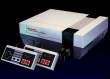 |
Posted on Mar 21st 2009 at 12:01:42 PM by ( NESman93) Posted under Gradius, NES, Sega, Nintendo, Saturn, SNES, Sony, Playstation, Playstation 2, Arcade, Life Force, Salamander |
In the world of SHMUPS, some series' stand out from the rest. To me, that series is the Gradius series. In this overview, i will run through, briefly, the Gradius series. I will do the handheld versions at a later time.
Gradius (1985) - Arcade, NES, Famicom, PC Engine, Saturn, PC, C64, Wii VC, PS2, ZX Spectrum, PSX, PSP, DS
[img align=right]http://i244.photobucket.com/albums/gg15/claudiacas/Gradius.jpg[/img]
This is the original Gradius arcade game, released in 1985 by Konami. In Europe, however, the game was released under the name Nemesis. Like with most games of this genre, there is one objective: shoot everything that moves. In the game, you control the spaceship called the Vic Viper through different environments. When you start the game, the Vic Viper is pretty slow and has a weak gun. When you shoot enemies, some will drop powerups. You can pick these up, and then activate them to power up your ship. These powerups are spare guns, missiles, lasers, shield, speed ups, and upward shots. The only ports that I have seen are the Saturn, NES, and PSP versions. The NES got an actual arcade port in 1986. Just like most Konami games in the early days, the Konami Code is in the game. However, it does not give you 30 lives. Enter the code while the game is paused, and your ship will be instantly equipped with most of the weapons. The Saturn and PSP, however, have compilations that the games appear on. The Saturn has Gradius collection that has Gradius I & Gradius II on one disk. However, there have been reports of slowdown in game. Also, the Gradius Deluxe Pack was not released in North America or Europe. The PSP has Gradius Collection that has Gradius I, II, III, IV, and Gradius Gaiden.
Salamander/Life Force (1986) - Arcade, Famicom, NES (Life Force), PSP, Saturn, MSX, PC Engine, C64, ZX Spectrum, Amstrad, PS1, Wii VC
[IMG align=right]http://i539.photobucket.com/albums/ff357/kristoferr88/Salamander_flyer.png[/img]
In 1986, Konami released, what was supposed to be the sequel to Gradius. That game was Salamander. However, the game was not released as Salamander in North America. It was released as Life Force. The game is basically the same thing. The ports, however, had some significant differences. When it was released for the Famicom/NES, they changed the powerup system back to the type from Gradius. Also, the Konami code is included with this game. Enter it and receive 30 lives. Just like with Gradius, Salamander got a release on the PS1 and Saturn with the Salamander Deluxe Pack with Salamander, Life Force, and Salamander 2. Again, this disk did not receive a North American or European release.
Gradius II (1988) - Arcade, Famicom, PSX, Saturn, Windows, MSX, PCE Super CD, PSP, Wii VC
[img align=right]http://upload.wikimedia.org/wikipedia/en/2/2f/Gradius_II_flyer.png[/img]
Gradius II was the true sequel to Gradius. Released in 1988, while the game played very similar to Gradius, there are certain areeas of the game where the scrolling was not limited to the edges of the screen. However, when the game was released in Europe, it was released as Vulcan Venture. Also, the player's ship had a choice of defense: forcefield or shield. Like with Salamander, Gradius II did not see a North American release until the release of Gradius Deluxe Pack. Another big addition to the game was the "Boss Alley" or "Boss Rush," a level filled entirely with only boss confrontations. This was also the first Gradius game that gave you the chance to choose the set of weapons that you want to use. The first true port of the game was the version on the Nintendo Famicom. Thankfully, the Famicom version has the Konami code included, and actually gives the player 30 lives this time around. Other than the few additions, and new boss, the game plays mainly like Gradius.
Graidus III (1991) - Arcade, SNES, Wii VC, PSP, PS2
[IMG align=right]http://i498.photobucket.com/albums/rr341/fabio73/SNES Artwork/GradiusIIIU.png[/img]
The third game in the Gradius series, Gradius III, was originally released in 1989 in Japan, and 1991 in North America. There were some major differences between Gradius II & III. For one, Gradius III is much harder, and is known as one of the most difficult of the series. Just like in Gradius II, Gradius III allows you to select the set of weapons for the Vic Viper. However, Gradius III also contains what is called the "Edit Mode." This edit mode allows the player to choose each individual weapon for the Vic Viper. In the main gameplay, Gradius III plays very much like the original Gradius. There are a total of 10 levels, with stage 4 being in a pseudo-3D environment. In this stage, you get more of a first-person view of the playfield. You also have to shoot objects and avoid numerous walls in order to survive. The game also contains two hidden levels. These 2 hidden levels are throwbacks to Gradius and Salamander. They were designed to look like the early first stage of each game. In the way of ports of the game, the SNES got the first port. The port is very close to the original arcade game, except for the fact that the pseudo-3D level has been omitted. This version is also available on the Nintendo Wii's Virtual Console. The PS2 also got a port of the game when Konami put Gradius III and Gradius IV Fukkatsu onto one disk in a game simply titled Gradius III and IV. This version is more of a direct arcade port than the SNES version. Gradius III is also available on the Playstation Portable.
Salamander 2 (1996) - Arcade, Sega Saturn, PSX, PSP
[img align=right]http://media.giantbomb.com/uploads/1/16390/542875-salmndr2_screen_large.png[/img]
Now, Salamander 2, released in 1996 is, of course, a direct sequel to Salamander, and another member in the long-running Gradius series. It plays more like Salamander than Gradius in the way that it abandoned the Gradius-style power up bar and used the simple icon collection power up system. The only real downside to this is the fact that the player's ship cannot speed up without getting a speed up icon. Another big change from Salamander is the fact that Salamander 2 has the ability for any of the weapons to become "Super" weapons for ten seconds. For example, if the player's ship has the ripple shot and the player collects another ripple icon, the weapon becomes the Buster Ripple for about 10 seconds. This game is one of the least ported Gradius series game. It has only been ported to the PS1, Saturn, and PSP. PS1 and Saturn with the Salamander Deluxe Pack, and the PSP with Salamander Portable.
Gradius Gaiden (1997) - PSX, PSP
[img align=right height=250 width=246]http://upload.wikimedia.org/wikipedia/en/0/09/Gradius_gaiden-cover.jpg[/img]
Gradius Gaiden, released in 1997, was only released on the PS1 in Japan. The game's core gameplay remained unchanged completely. However, the player is given 2 new ships with new weapon systems that had never been seen before. Also, some of the signature weapons, notably the Reduce Size, rechargeable E. Laser, and some of the option types were removed between Gradius III and Gaiden. The new ships in the game are called the Jade Knight and the Falcon B. Other than the original PS1 version of the game, the game has only been ported once. This game was included as part of the PSP's Gradius Collection.
Gradius Solar Assault (1997) - Arcade
[img align=right height=270 width=266]http://upload.wikimedia.org/wikipedia/en/8/85/Solar_Assault_flyer.jpg[/img]
Gradius Solar Assault was originally released in July 1997. Compared to the other Gradius games, Gradius Solar Assault is a completely different specimen. This was the first ever, first person, fully 3-D Gradius game. The powerup system, control scheme, and gameplay are basically the same thing. Another big change is the fact that the player's ship has a health bar, instead of being destroyed on impact with an object or after being shot by an enemy. This game comes with a choice of 3 ships this time around, much like Salamander 2. The ships this time around are BP-592A Vic Viper, LS-379G Lord British, and the WC-672H Alpinia. Gradius Solar Assault came in 2 different variations. First, of course, there is the standard stand up arcade unit. Then, there is the SpeedKing Deluxe Simulator. This version is an enclosed pod that tilts along with the gameplay by pneumatic power, much like an original Sega AfterBurner II unit. This is the only Gradius game that was never ported to a home console.
Gradius IV Fukkatsu (1998) - Arcade, PS2, PSP
[img align=right width=250 height=175]http://upload.wikimedia.org/wikipedia/en/d/d1/Grad0012.png[/img]
Released in February 1998, Gradius IV Fukkatsu was the fourth in the arcade series of Gradius games. Just like Gradius III, the core gameplay remained unchanged, but other things were changed, such as some weapon types. Also, the edit mode was removed and had an online score ranking system added in. More of the weapons from Gradius III, including its 7th so-called "!" powerup level were also removed. The game still contained the different powerup categories from Gradius II & III. The total for Gradius IV Fukkatsu was now up to 6 different sets of weapons to choose from. 4 from Gradius II, and 2 new ones for Gradius IV. One of the biggest additions to the game was the online ranking system. When the player's game ends, he/she is presented with a password. This password contained score information, and could be uploaded to a Konami website. However, this was only available in Japan and was discontinued on August 27, 1998, 7 months after the initial release of the game. Gradius IV was another one of the Gradius games that was hardly ported. While there is no direct port of the game, it was included on the Gradius III/IV compilation on the PS2. This version also has a mode that allows you to fight all of the game's bosses in a more time attack fashion. Again, this game made the cut in Gradius Collection for the PSP.
Gradius V (2004) - PS2
[img align=right width=220 height=303]http://upload.wikimedia.org/wikipedia/en/4/44/Gradius_V_cover.jpg[/img]
Released in 2004, Gradius V is only the 2nd Gradius game to be released straight to a home video game console. In this case, it is the Playstation 2. Gradius V is considered to be one of the greatest of the whole series. This game had a major graphical overhaul from other Gradius games, making one of the most aesthetically pleasing. The game has the same, classic core gameplay as the rest of the series, but has some new and very interesting controls that make the game easy for anyone to pick up and play. Like in some previous games, you have a health bar, and a power up bar, making it easier to take multiple hits without being destroyed on the first hit. One of the more helpful upgrades in the game is the Multiple Control. The multiples (the little spare guns that fly around the Vic Viper) can be set by the player. At the press of a button the player can quickly change the position of the multiples, making hard to shoot areas easy to shoot. Gradius V, while published by Konami, was actually developed by the Treasure team, whom most of you know as the team that created Ikaruga and Radiant Silvergun. Because of this, Gradius V is considered one of the best of the whole series.
Now I realize that I have left out some of the games, most notably the portable Gradius games, such as Nemesis. I will get to those in a separate overview. I hope that this will give some pretty good insight and information of these games. After this, I will be going in to more detail by reviewing the games.

I thought it was time I gave Burn:Cycle a try as I'd heard good things about it, and whilst I've had the CDi for quite a while it's never had much love. I'd picked it up as part of a deal with a boxed Sega Saturn and a handful of games.Burn:Cycle was released in 1994, and it shows it's age, coupling FMV sequences with VR imagery that could have come straight from Lawnmower Man, albeit with fewer chrome reflection effects. It's not terrible, but it's not exactly easy on the eyes either, favouring reds and blues, and not much else.
The look and feel is total cyberpunk, exactly right for the era; 80s 'what the hell are you wearing?' fashions; Hollywood style technobabble; a fairly predictable plot - data thief infected with a computer virus that's set to kill him must find out why before the 'cure' can be found.
The opening of the game sets you up for exactly how the rest of it will play out - make a few random clicks around the screen, interact with a couple of objects, turn around and get instantly killed.
GAME OVER
Get used to the sight of that, you'll be seeing it a lot. The 2 hour real time dead line for the game means that it's artificially lengthened by a punishing difficulty and frequent insta-death(tm) I'd forgotten just how annoying games can be when they get the basics wrong.
The save/restore mechanism is absolutely dire, using the point and click system like it does you can lose precious seconds just navigating around the menus, and the lack of 'snap to' on the default options is a serious omission.
The scenery makes navigating extremely difficult, amd the point and click interface means that you don't always head off where you think you're going, nor is it easy to see entrances to new areas. I've frequently had to resort to a walkthrough to find where I need to be going, but once there the puzzles are reasonably entertaining.
The game is frequently let down by 'Dick van Dyke in Mary Poppins' accents, I just can't abide them, and find them incredibly jarring. What is it about games designers that think they can get away using a friend of a friend for a voice over? And why is it that the only English accents that exist outside the real world are either Queen's english, or Cockney?
The sad thing is I really wanted to like this game, I'm a huge fan of cyberpunk. I grew up reading William Gibson novels, I played Cyberpunk and Shadowrun RPGs on paper, my first email address alias was 'thecount@someuniversity.ac.uk' and no end of home electronics projects ended up in matt black boxes with an Ono Sendai brand label applied somewhere discrete
End Result
Total play time: 9 hours
Bad English accents: 3
Deaths by meteor: Millions
'Screw you!s' shouted at the screen in frustration: Too many to remember
Final Verdict
It's a passable game spoiled by a poor interface and an incredibly frustrating level of difficulty. In it's day it was probably incredible, but is now over shadowed by current gen cgi and an audience expecting much more in the way of interactivity.
I recently downloaded this freeware game (about 2 days ago). Here are my impressions of the first 7 screens of the game (yeah, I've only made it through 7 screens and I've played it for about 2 hours).
I Wanna Be The Guy: The Movie: The Game is as ridiculous as the name of the game. You play as 'The Kid' who is on a quest to defeat 'The Guy' and become 'The Guy'. The game pays homage to the older games we know and love and brings us back to a time when games used to be hard... then says screw you to the games we thought were hard and absolutely shatters our perception of a difficult game.
The game is very simple. You are 'The Kid' and you want to go around from one screen of obstacles to the next in order to eventually find one of the 8 pieces of something or other which will enable you to beat 'The Guy'. You can move right, left, jump, and fire a tiny gun. Sounds like it can't be that hard right? You couldn't be any more wrong.
This game is absolutely ridiculous. You die in one hit and explode into a shower of blood. Instead of fruit falling straight down, it might fall straight up or horizontally. Random spikes will fall from the sky and obliterate your character, random stars that are part of the background will fall and destroy you, an airplane will come and wipe out your character, a boulder that takes up 1/2 the screen might drop and destroy absolutely everything while you run from it... and all this occurs in the first 7 screens of the game.
So why is the game good? Two reasons. First it incorporates classic games such as Zelda, Punchout etc into the stages, music, and bosses. Secondly, the ways in which you will die are awesomely ridiculous and often hysterical. For example, I often find myself yelling out 'Oh god what the ****!' then start laughing hysterically.
As cool as the game might sound, it doesn't change the fact that it is the hardest game you will ever play. A lot of the deaths are completely unexpected which brings a hearty amount of laughs; but this doesn't even incorporate the amount of times you will die even knowing the unexpected occurrences which are about to unfold. Once you get past the unexpected death occurrences (which there are a few per screen), you have an expertly engineered 2d platformer that is just flat out difficult. With timing jumps, precision controls, and expected obstacles (once you find out via an unexpected death) you have a simple platformer that is very very difficult. I have died roughly 200 times already and am only 7 screens into the game. Of those deaths, I'd say about 1/6 if that were from me not knowing the existence of a hazard. That should give you an idea of how hard the game is even knowing the whereabouts of the hazards.
This game is not for everyone. If you don't enjoy excruciatingly difficult games you might want to give it a pass. But if you love expertly crafted platformers and don't mind a few deaths here and there this is right up your alley. But one thing anyone will appreciate is the incorporation of classic games such as Zelda, Super Mario, Punchout ect. And remember, though your character may blow up in a sea of blood from an unexpected event, it is generally pretty damn funny. Oh, and one more thing. The game has multiple difficulties ranging from normal to insane. These change the amount of savepoints found in the game. But if you play on normal you are forced to play with a ribbon in your hair and the extra savepoints say 'wuss' on them.
For anyone who is interested in giving the game a whorl,
http://kayin.pyoko.org/iwbtg/index.php
In the spirit of my "The Best System Ever" series, we, as a community, will choose the BEST video game character... EVER!!! "But, there are so many," one might say... Well, this is where the blog comes in.
YOU! The reader! You will submit 2 Nominations via the Comment box for the "Best of the Best" Poll/Tournament. You will say the character's name, the game or games that they are in (or the series, ie Final Fantasy), and submit. Done! Hopefully, everyone's nomination can get in, provided that we have at least a few duplicates (hint hint, wink wink, nudge nudge). Then, rounds will consist of 2 or 4 characters each, depending on the number originally submitted. The poll will progress to the next round after 5 days. Each character that is in a specific poll on a specific day will also be paired with a bio. This bio will have information on the character, as well as a picture, etc.
Now, the clincher; I'm giving you, the reader, the ability to submit a bio to be included in the polls. Granted, it will probably be cut down and reformatted, but you will receive credit, and lot's of it. I do this to cut down on time out of my studies.  Not all bios will need to be submitted, but if people are in a writing mood, then you can shoot me a PM with a bio in it on a specific character that is in any given poll. This will make the poll run a lot smoother, and it gets your name put out there! What a snazzy idea, right?! Not all bios will need to be submitted, but if people are in a writing mood, then you can shoot me a PM with a bio in it on a specific character that is in any given poll. This will make the poll run a lot smoother, and it gets your name put out there! What a snazzy idea, right?! 
So, to push the snowball down the hill, my two picks are... (drumroll):
-Sonic the Hedgehog (Sonic the Hedgehog series)
and
-Mario (Mario series).
Let's see those Nominations people, and may the best man (or rather, character) win!
Now games which rarely appears on eBay are more pressurising than regular games, whether they are rare or not. This is because if they Seldom appear, then if you bid for one you will be afraid of losing because it may never appear again for possibly one, two, three, four or maybe (in the case of the game Syndicate apparently) five or more years.
Continue reading Lets stay Sensible
I'm well aware this is old news, but I wanted to post it anyways. So, last month, Gamestop had a promotion targeted at women titled "Sharpen the mind; shape the body", which was targeted at women. Basically, you get a free subscription to Oprah or some other magazine women would be interested in if you buy X amount of DS or Wii stuff. Obviously, GameStop's core market is not females, so GameStop's HQ sent out this pathetically sexist training video to all their stores, informing employees how to sell things to females.
If the video wasn't good enough for you, then check after the break for an (NSFW) version with some hilarious commentary.
Continue reading Late to the Party: How GameStop Targets Women
http://www.gametrailers.c...er/usermovies/310679.html
You know, Mega Man 2 is fantastic. Absolutely and completely fantastic. Well, there is this video of Mega Man 2.5D. Doesn't it look amazing? Too bad Capcom isn't the one developing it. If only they'd let this development continue to completion. Have a blind eye, just like Nintendo did for Mother 3.
Well, today is St. Patrick's Day. It's a lovely day, really, and regardless of if you're Irish or not it is a fantastic excuse to get drunk, provided of course you're of the legal age. We at RF Generation want you to know that underage drinking is bad, and if you do it beware the consequences. Anyways, hit the jump if you want to delve further into my aside.
Continue reading It's St. Patrick's Day. Why not some Games with Your Drinks?
| Up, Up, Down, Down, Left, Right, Left, Right, B, A I glance up at the two ready-for-action commandos displayed on the title screen, hoping for some type of manly 'grunt' of acknowledgement for my efforts - I am awarded with nothing but silence. With apprehension I take a quick look down at the crumpled code page from Electronic Gamer straddling my lap. "Try pressing the 'Start' button after the code like we told you" the text lectured back to me. OK, point made. I proceed as directed and again wait patiently for what seemed to be an eternity (in reality it was about three seconds) for the magic to now happen. Yahtzee!! I see my freedom fighter start off on level 1 with 30 lives instead of the rather measly, standard allotment of 3! Time to go dole out some pain and punishment to the heathens!!! | 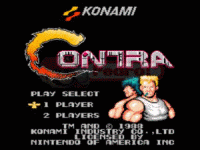 |
I can still vividly remember the extreme rush I felt when activating that legendary Konami cheat code while playing Contra on my Nintendo Entertainment System as described above. This article focuses on just that - extraordinary video gaming moments you will never forget. All gamers have experienced them, each being unique with different drivers.
As some of you may know, I am an old school gamer - literally. I had the pleasure of growing up during the advent of the video game console and have experienced first hand each new technological breakthrough in this arena. This doesn't make me an expert - far from it. It just means that I am old. The following are just a few of my more memorable gaming moments that I remember to this day as though it just happened yesterday evening. Some describe the pure excitement derived from solving an exceptionally difficult levelboss to simply being blown away by the technology. I chose 'adrenaline' moments for each era, listed chronologically. | 1975 - Atari PONG | 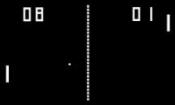 A standard December gathering at my Uncle Glenn's home? Not! A steady stream from 'Aqualung' by Jethro Tull was the replacement for the more traditional, tranquil holiday offerings (much to my Grandmother Alice's dismay). The showstopper occurred when he fired up his newly acquired Atari PONG system. Though I was quite young, I remember being amazed by what I eventually saw on his 19" black and white television screen - PONG. The adults pretty much monopolized the gaming that evening, but my cousin Rob and I finally got our chance just before we had to leave. We basically stunk and it was a miracle when we could manage a total of three consecutive volleys. Still, it was pure joy and heaven for us. A standard December gathering at my Uncle Glenn's home? Not! A steady stream from 'Aqualung' by Jethro Tull was the replacement for the more traditional, tranquil holiday offerings (much to my Grandmother Alice's dismay). The showstopper occurred when he fired up his newly acquired Atari PONG system. Though I was quite young, I remember being amazed by what I eventually saw on his 19" black and white television screen - PONG. The adults pretty much monopolized the gaming that evening, but my cousin Rob and I finally got our chance just before we had to leave. We basically stunk and it was a miracle when we could manage a total of three consecutive volleys. Still, it was pure joy and heaven for us.
| 1977 - Atari 2600 : Air-Sea Battle | 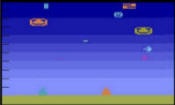 My friend Steve (a.k.a. P-Man) was the first to have access to the new line of cartridge based systems - the Atari 2600. Drago (another neighborhood crony) and I were pumped about this and itching to play. Now Steve screwed up somehow on the home front very soon after this acquisition. He was not allowed to have any of us mates over at all for one entire month - plus the 2600 was off limits to him as well. Talk about cruel and unusual punishment! The day finally arrived when 'our' sentence was over and we could hunker down and experience this new technology. We were not disappointed. The graphics for us were astonishing and when the time counter started to blink in those last 16 seconds of the round - pure adrenaline! My friend Steve (a.k.a. P-Man) was the first to have access to the new line of cartridge based systems - the Atari 2600. Drago (another neighborhood crony) and I were pumped about this and itching to play. Now Steve screwed up somehow on the home front very soon after this acquisition. He was not allowed to have any of us mates over at all for one entire month - plus the 2600 was off limits to him as well. Talk about cruel and unusual punishment! The day finally arrived when 'our' sentence was over and we could hunker down and experience this new technology. We were not disappointed. The graphics for us were astonishing and when the time counter started to blink in those last 16 seconds of the round - pure adrenaline!
| 1987 - Nintendo Entertainment System : Castlevania II Simon's Quest | 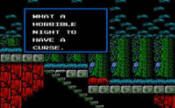 This classic is either loved or hated by Castlevania fans. More of an RPG (role playing game) than the standard actionadventure fair the series is known for, tackling this game is not an easy task. One particularly frustrating section for me was being stuck in front of a death-inviting lake with no where to go. I starting chucking holy water and just about everything else I had in my sack into that cesspool to no avail. Trial and error button combinations were then deployed at this despised location. By a stroke of pure luck I finally issued the 'Kneel Down' command at the left hand side of this pool - a magical walkway under the raging current miraculously appeared! Thank the heavens for this since I was really getting sick of beating through those werewolves and goblins every time 'Day' turned into 'Night' (which seemed to happen every 4 minutes or so). This classic is either loved or hated by Castlevania fans. More of an RPG (role playing game) than the standard actionadventure fair the series is known for, tackling this game is not an easy task. One particularly frustrating section for me was being stuck in front of a death-inviting lake with no where to go. I starting chucking holy water and just about everything else I had in my sack into that cesspool to no avail. Trial and error button combinations were then deployed at this despised location. By a stroke of pure luck I finally issued the 'Kneel Down' command at the left hand side of this pool - a magical walkway under the raging current miraculously appeared! Thank the heavens for this since I was really getting sick of beating through those werewolves and goblins every time 'Day' turned into 'Night' (which seemed to happen every 4 minutes or so).
| 1992 - Nintendo Super Entertainment System : Super Star Wars | 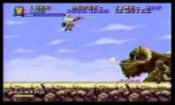 This game is extraordinarily difficult, to the point of being frustrating at times. One poorly timed jump and it was instant death for my Jedi hero. Thank goodness it contained one of the best Easter Eggs in the history of video games (in my humble opinion) - "The Cave of 99 Free Lukes". Following the directions as outlined in my Game Informer magazine, I bravely stepped off the specified cliff and furiously cranked on the Left directional button as my Padawan plummeted downward. At the last moment before it was 'goodbye Luke', I spotted the ledge to the secret cave entrance, barely making it to safe ground. I would not be disappointed. With proton blaster in hand, I unleashed the weapon's fury into the blank recesses of this grotto and 'Free Lukes' starting appearing everywhere!! To this very day that is one of the best rushes I have ever had. This game is extraordinarily difficult, to the point of being frustrating at times. One poorly timed jump and it was instant death for my Jedi hero. Thank goodness it contained one of the best Easter Eggs in the history of video games (in my humble opinion) - "The Cave of 99 Free Lukes". Following the directions as outlined in my Game Informer magazine, I bravely stepped off the specified cliff and furiously cranked on the Left directional button as my Padawan plummeted downward. At the last moment before it was 'goodbye Luke', I spotted the ledge to the secret cave entrance, barely making it to safe ground. I would not be disappointed. With proton blaster in hand, I unleashed the weapon's fury into the blank recesses of this grotto and 'Free Lukes' starting appearing everywhere!! To this very day that is one of the best rushes I have ever had.
| 1994 - Panasonic 3DO : Shock Wave | 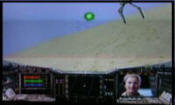 I admit it - I was the first in line at my local Electronics Boutique to buy this system for $699 upon its launch back in 1993. Not a good move, I know. But when I first fired up Shock Wave, I was completely blown away! Yes, FMV (Full Motion Video) had already been introduced in earlier systems, but the Panasonic 3DO did take it to the next level back in the day. The intro alone was impressive, making me feel like I was the star protagonist in an actual movie. When my star fighter absorbed its first 'neon-green proton' hit, my squad Commander promptly appeared in my HUD (Heads Up Display) and barked at me "This is not a game Lieutenant!!". At that point I was hooked. (Side note: Does anyone else think that Commander was kind of hot?) I admit it - I was the first in line at my local Electronics Boutique to buy this system for $699 upon its launch back in 1993. Not a good move, I know. But when I first fired up Shock Wave, I was completely blown away! Yes, FMV (Full Motion Video) had already been introduced in earlier systems, but the Panasonic 3DO did take it to the next level back in the day. The intro alone was impressive, making me feel like I was the star protagonist in an actual movie. When my star fighter absorbed its first 'neon-green proton' hit, my squad Commander promptly appeared in my HUD (Heads Up Display) and barked at me "This is not a game Lieutenant!!". At that point I was hooked. (Side note: Does anyone else think that Commander was kind of hot?)
| 1994 - Panasonic 3DO : Out of this World |  Though I did not want to include two 3DO games in this listing, I would be remiss if I did not include this experience in this article. From the moment the artistic polygon animations were displayed in the intro, I was roped in. In gaming sessions with my buddies Drago and Cola, we collectively beat through this game until we hit the wall. Our Lester, in a prone position, was presented in a domed room and was subjected to an almost instantaneously electrocution. Almost two hours later, despite all the running, blaster fire, throwing up force fields, etc. we were still getting fried in this room of pain. Cola's turn was up and we were prepared for more of the same, except Drago uttered two words in an almost inquisitive voice - "crawl backwards". Yessss!! Our Lester finally avoided the lethal charge and was gratefully free to exit from this living hell. Though I did not want to include two 3DO games in this listing, I would be remiss if I did not include this experience in this article. From the moment the artistic polygon animations were displayed in the intro, I was roped in. In gaming sessions with my buddies Drago and Cola, we collectively beat through this game until we hit the wall. Our Lester, in a prone position, was presented in a domed room and was subjected to an almost instantaneously electrocution. Almost two hours later, despite all the running, blaster fire, throwing up force fields, etc. we were still getting fried in this room of pain. Cola's turn was up and we were prepared for more of the same, except Drago uttered two words in an almost inquisitive voice - "crawl backwards". Yessss!! Our Lester finally avoided the lethal charge and was gratefully free to exit from this living hell.
| 1996 - Sony Playstation : King's Field |  I admit to being somewhat of a fanboy of this series, but this game truly rocks. The Playstation has been recently released in the US and King's Field was one of the first to exploit the true power of this fledgling console. Upon firing up this FP (First Person) RPG game I was greeted with dark, ominous music that appropriately set the tone for my upcoming adventure. After a so-so intro the screen fades from black to reveal the brooding island that I have been shipwrecked upon. I was amazed as I maneuvered my viewpoint to check out my local surroundings. This was one of my first experiences with FP technology (to this degree) and I have been a fan ever since. This was truly a treat for all of my senses, right up until the point where I took my first three steps and plunged to my death in the icy cold waters of Melanat. I admit to being somewhat of a fanboy of this series, but this game truly rocks. The Playstation has been recently released in the US and King's Field was one of the first to exploit the true power of this fledgling console. Upon firing up this FP (First Person) RPG game I was greeted with dark, ominous music that appropriately set the tone for my upcoming adventure. After a so-so intro the screen fades from black to reveal the brooding island that I have been shipwrecked upon. I was amazed as I maneuvered my viewpoint to check out my local surroundings. This was one of my first experiences with FP technology (to this degree) and I have been a fan ever since. This was truly a treat for all of my senses, right up until the point where I took my first three steps and plunged to my death in the icy cold waters of Melanat.
| 2001 - Sony Playstation 2 : Grand Theft Auto III | 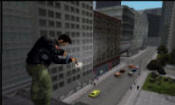 Everyone knows this game so I won't spend any time prefacing this classic. Sure, I had run over old ladies with walkers in Road Rash and had my share fair of fun decapitating foes in Mortal Kombat, but this was nothing compared to the mayhem that awaited me in Grand Theft Auto III. Sniping innocent civilians was a blast, but what I remember most was being astonished by the size of the gaming arena known as Liberty City - it was HUGE and mine to exploreexploit as I saw fit. Thank goodness I enjoy this explorative aspect of video gaming since I frequently found myself completely lost in this sprawling city navigating my 'Stallion' without any real type of plan. (I do admit that my favorite part of this game is still taking off the limbs of pedestrians with my Sniper rifle.) Everyone knows this game so I won't spend any time prefacing this classic. Sure, I had run over old ladies with walkers in Road Rash and had my share fair of fun decapitating foes in Mortal Kombat, but this was nothing compared to the mayhem that awaited me in Grand Theft Auto III. Sniping innocent civilians was a blast, but what I remember most was being astonished by the size of the gaming arena known as Liberty City - it was HUGE and mine to exploreexploit as I saw fit. Thank goodness I enjoy this explorative aspect of video gaming since I frequently found myself completely lost in this sprawling city navigating my 'Stallion' without any real type of plan. (I do admit that my favorite part of this game is still taking off the limbs of pedestrians with my Sniper rifle.)
| 2006 - Microsoft Xbox 360 : The Elder Scrolls IV: Oblivion | 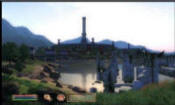 From the very moment I was able to control my paladin in the dark dungeon recesses at the very onset of this game, pure ecstasy is the only way I can describe it. Though I rather prefer the surreal atmosphere of its predecessor (Elder Scrolls III: Morrowind) to the 'Sound of Music' environment now presented to me, I can't help but to find myself almost being able to smell the dandelions as I make my way through the foothills of Cyrodiil. Now this is what 'Next Gen' is all about! From the very moment I was able to control my paladin in the dark dungeon recesses at the very onset of this game, pure ecstasy is the only way I can describe it. Though I rather prefer the surreal atmosphere of its predecessor (Elder Scrolls III: Morrowind) to the 'Sound of Music' environment now presented to me, I can't help but to find myself almost being able to smell the dandelions as I make my way through the foothills of Cyrodiil. Now this is what 'Next Gen' is all about!
| |
The preceding blurbs depict just a few of my most prized gaming experiences and recollections. As stated earlier, the trigger to these can be almost anything - success with a cheat code, the thrill at dispelling a nasty Boss to even your combatant's demise during an online session of Halo. The drivers change from individual to individual. There is one commonalty though - let these gems keep on happening!
Let's hear about your standout moments in gaming!
|
Love them or hate them, zombies have been in video games since the early eighties and don't look like they're going anywhere any time soon. In Valve's latest release, Left 4 Dead, you play as one of four survivors during the zombie apocalypse. Left 4 Dead features four scenarios where you must guide the survivors to a designated spot to be picked up before they are overwhelmed by the zombie horde. Left 4 Dead is a first person shooter, developed by Valve owned Turtle Rock Studios, using the Source engine. Left 4 Dead received a number of awards for it's multiplayer modes at the end of 2008, but is the game really worth your while? Let's take a look at the game and find out...
Continue reading Review: Left 4 Dead
|
|
|
|
Blog Navigation
Browse Bloggers | My Blog
|
We are a community of collectors, gamers and the likes, and some of us enjoy to let the world know what is on our mind. For those members, we have the community blogs, a place where they can publish their thoughts and feelings regarding life, universe, and everything. Some of those members might even choose to write about gaming and collecting! Whatever they write about, you can find it on their blog. You can either see the latest community blog entries in the feed you see to the left, or you can browse for your favorite blog using the menu above. Interested in having your own blog hosted on RF Generation? It's rather simple, first be a registered member, and then click the "My Blog" link that you see in the navigation above. Following those two steps will certainly get you on your way to blogging.
Sit back, relax, and enjoy our entries, rantings, and completely unrelated series of thoughts. We write for you to read, so we certainly hope that you enjoy our material.
|
|
Hot Community Entries
|
|
Hot RFG Blog Entries
| |
|