Apple has reported that CEO and Co-Founder Steve Jobs has died today after a long and painful struggle with Pancreatic Cancer.
Although his contributions to the tech world were more related to computers as opposed to video games, his contributions to the tech world will never be forgotten.
As well, though I was not much of an Apple fan, I do appreciate the contributions that he made to the technological world.
He will be missed.
I sit here in my room, on my bed, with my trusty 'ol NES fired up and a game of Super Mario Bros. going. As all of this is happening, I can't help but begin to feel a bit nostalgic. I all of a sudden realized that I have owned my NES since right before I started high school. I graduated last Friday. Where the hell has the time gone? All of this makes me reflect upon my gaming past. And if you'll indulge me, I'd like to sit here and give you a short history.
When I was just a young lil NESman, (Before I actually ever played an NES, so I was more of a lil SNESman, but I digress), I loved video games. For the longest time, we owned no video games in our house, save maybe those little childish, yet awesome, LCD games. However, we did have access to a Sega Genesis over at my grandmother's house, so we played that when we could. Soon after that, we finally got a SNES in our house!!! Even after that, because we didn't have many games, I continued to play the Genesis (Lay off! They had both Sonic and Sonic 2, what more could you want?!).
Well, as time went on, I finally got my very own system that I could call mine when I was six. On my sixth birthday, I got a Sega Genesis 3. Well, then I ended up finally getting a Playstation, then a PS2, about 2 years ago.
I have acquired these classic games of the last 4 or so years, except for the Genesis model 2 and 3 that are the self same ones that I've owned since I was but a lad.
I know this was probably a total waste of my time and your time, but I felt the need to do it. It's weird to sit and play a game and have it make me look back and reflect. However, since I have graduated high school and am going off to college in the fall, I have to look back and realize how fun a time I had with all of these video games. Chances are, I'll never let them go.
[IMG align=right]http://i618.photobucket.com/albums/tt270/Austinw80/GuitarHeroMetallica-WiiBoxArt.jpg[/img]
Well, the latest in the Guitar Hero series, Guitar Hero Metallica, is a god-send for both Guitar Hero and Metallica fans alike. I am talking here about the Wii version, which may not look as good as the 360 or PS3 versions, but is still a good enough version.
Difficulty
Just as with any Guitar Hero/Rock Band game, the difficulty increases with each level. However, Guitar Hero Metallica, just like World Tour, has an extremely easy, beginner level. This beginner level has no notes, and is basically for those who have just started playing and need to get used to strumming on the guitar controller. If you play the games as a drummer, and want to really prove how skilled you are at the drums, you can go one step beyond the hardest difficulty. You can change the drum difficulty to Expert+, which has you add an extra kick pedal to get the experience of using a double bass drum setup, just like Lars Ulrich. 5/5
Gameplay
The game plays just as you'd expect a Guitar Hero game to play. The game is set up, however, just like Guitar Hero World Tour, from the Rock Star/instrument creator down to the neck slider notes. Also, whenever you play a Metallica song, you actually get a chance to play as Kirk Hammett, Robert Trujillo, Lars Ulrich, or James Hetfield, depending on what position you are playing in the band. I am impressed by the number of guitars that are in the game, which as many of you know are actually axes used by Kirk Hammett and James Hetfield. There are also drums used by Lars Ulrich, and Basses used by Robert Trujillo. The gameplay has a completely different energy simply because it is music by Metallica, as well as other bands such as Motorhead, Mastodon, Lynyrd Skynyrd, Mercyful Fate, etc. 5/5
Graphics
The Wii surprisingly can present Guitar Hero Metallica very well, considering it is not as graphically powerful as the Xbox 360 or Playstation 3. The characters look decent enough, except for certain features, such as wrinkles, are not as detailed. Also, I've noticed that whenever you play a Metallica song, the hair on Robert Trujillo and Kirk Hammett do not move when they move. The same is true for all long haired characters in the game. This goes for such as Axel Steel, Clive Winston, and Marcus Fretshredder. Other than that, the graphics are decent enough to be thoroughly enjoyed.4/5
Sound/Music
This department is where Guitar Hero and Rock Band games shine the brightest. I have played both the 360 and Wii versions of this game, and I have heard no audio differences between the two. The large list of Metallica songs, as well as the other artists' songs, sound very high quality,and as i said earlier, I have heard no audio differences between the different versions.5/5
Even for a system as low-powered as the Nintendo Wii, Guitar Hero Metallica is presented very well. I am impressed by the graphics, despite the fact that they are not as smooth as the PS3 or 360.
Final Score:19/20=95%
 |
Posted on Mar 21st 2009 at 12:01:42 PM by ( NESman93) Posted under Gradius, NES, Sega, Nintendo, Saturn, SNES, Sony, Playstation, Playstation 2, Arcade, Life Force, Salamander |
In the world of SHMUPS, some series' stand out from the rest. To me, that series is the Gradius series. In this overview, i will run through, briefly, the Gradius series. I will do the handheld versions at a later time.
Gradius (1985) - Arcade, NES, Famicom, PC Engine, Saturn, PC, C64, Wii VC, PS2, ZX Spectrum, PSX, PSP, DS
[img align=right]http://i244.photobucket.com/albums/gg15/claudiacas/Gradius.jpg[/img]
This is the original Gradius arcade game, released in 1985 by Konami. In Europe, however, the game was released under the name Nemesis. Like with most games of this genre, there is one objective: shoot everything that moves. In the game, you control the spaceship called the Vic Viper through different environments. When you start the game, the Vic Viper is pretty slow and has a weak gun. When you shoot enemies, some will drop powerups. You can pick these up, and then activate them to power up your ship. These powerups are spare guns, missiles, lasers, shield, speed ups, and upward shots. The only ports that I have seen are the Saturn, NES, and PSP versions. The NES got an actual arcade port in 1986. Just like most Konami games in the early days, the Konami Code is in the game. However, it does not give you 30 lives. Enter the code while the game is paused, and your ship will be instantly equipped with most of the weapons. The Saturn and PSP, however, have compilations that the games appear on. The Saturn has Gradius collection that has Gradius I & Gradius II on one disk. However, there have been reports of slowdown in game. Also, the Gradius Deluxe Pack was not released in North America or Europe. The PSP has Gradius Collection that has Gradius I, II, III, IV, and Gradius Gaiden.
Salamander/Life Force (1986) - Arcade, Famicom, NES (Life Force), PSP, Saturn, MSX, PC Engine, C64, ZX Spectrum, Amstrad, PS1, Wii VC
[IMG align=right]http://i539.photobucket.com/albums/ff357/kristoferr88/Salamander_flyer.png[/img]
In 1986, Konami released, what was supposed to be the sequel to Gradius. That game was Salamander. However, the game was not released as Salamander in North America. It was released as Life Force. The game is basically the same thing. The ports, however, had some significant differences. When it was released for the Famicom/NES, they changed the powerup system back to the type from Gradius. Also, the Konami code is included with this game. Enter it and receive 30 lives. Just like with Gradius, Salamander got a release on the PS1 and Saturn with the Salamander Deluxe Pack with Salamander, Life Force, and Salamander 2. Again, this disk did not receive a North American or European release.
Gradius II (1988) - Arcade, Famicom, PSX, Saturn, Windows, MSX, PCE Super CD, PSP, Wii VC
[img align=right]http://upload.wikimedia.org/wikipedia/en/2/2f/Gradius_II_flyer.png[/img]
Gradius II was the true sequel to Gradius. Released in 1988, while the game played very similar to Gradius, there are certain areeas of the game where the scrolling was not limited to the edges of the screen. However, when the game was released in Europe, it was released as Vulcan Venture. Also, the player's ship had a choice of defense: forcefield or shield. Like with Salamander, Gradius II did not see a North American release until the release of Gradius Deluxe Pack. Another big addition to the game was the "Boss Alley" or "Boss Rush," a level filled entirely with only boss confrontations. This was also the first Gradius game that gave you the chance to choose the set of weapons that you want to use. The first true port of the game was the version on the Nintendo Famicom. Thankfully, the Famicom version has the Konami code included, and actually gives the player 30 lives this time around. Other than the few additions, and new boss, the game plays mainly like Gradius.
Graidus III (1991) - Arcade, SNES, Wii VC, PSP, PS2
[IMG align=right]http://i498.photobucket.com/albums/rr341/fabio73/SNES Artwork/GradiusIIIU.png[/img]
The third game in the Gradius series, Gradius III, was originally released in 1989 in Japan, and 1991 in North America. There were some major differences between Gradius II & III. For one, Gradius III is much harder, and is known as one of the most difficult of the series. Just like in Gradius II, Gradius III allows you to select the set of weapons for the Vic Viper. However, Gradius III also contains what is called the "Edit Mode." This edit mode allows the player to choose each individual weapon for the Vic Viper. In the main gameplay, Gradius III plays very much like the original Gradius. There are a total of 10 levels, with stage 4 being in a pseudo-3D environment. In this stage, you get more of a first-person view of the playfield. You also have to shoot objects and avoid numerous walls in order to survive. The game also contains two hidden levels. These 2 hidden levels are throwbacks to Gradius and Salamander. They were designed to look like the early first stage of each game. In the way of ports of the game, the SNES got the first port. The port is very close to the original arcade game, except for the fact that the pseudo-3D level has been omitted. This version is also available on the Nintendo Wii's Virtual Console. The PS2 also got a port of the game when Konami put Gradius III and Gradius IV Fukkatsu onto one disk in a game simply titled Gradius III and IV. This version is more of a direct arcade port than the SNES version. Gradius III is also available on the Playstation Portable.
Salamander 2 (1996) - Arcade, Sega Saturn, PSX, PSP
[img align=right]http://media.giantbomb.com/uploads/1/16390/542875-salmndr2_screen_large.png[/img]
Now, Salamander 2, released in 1996 is, of course, a direct sequel to Salamander, and another member in the long-running Gradius series. It plays more like Salamander than Gradius in the way that it abandoned the Gradius-style power up bar and used the simple icon collection power up system. The only real downside to this is the fact that the player's ship cannot speed up without getting a speed up icon. Another big change from Salamander is the fact that Salamander 2 has the ability for any of the weapons to become "Super" weapons for ten seconds. For example, if the player's ship has the ripple shot and the player collects another ripple icon, the weapon becomes the Buster Ripple for about 10 seconds. This game is one of the least ported Gradius series game. It has only been ported to the PS1, Saturn, and PSP. PS1 and Saturn with the Salamander Deluxe Pack, and the PSP with Salamander Portable.
Gradius Gaiden (1997) - PSX, PSP
[img align=right height=250 width=246]http://upload.wikimedia.org/wikipedia/en/0/09/Gradius_gaiden-cover.jpg[/img]
Gradius Gaiden, released in 1997, was only released on the PS1 in Japan. The game's core gameplay remained unchanged completely. However, the player is given 2 new ships with new weapon systems that had never been seen before. Also, some of the signature weapons, notably the Reduce Size, rechargeable E. Laser, and some of the option types were removed between Gradius III and Gaiden. The new ships in the game are called the Jade Knight and the Falcon B. Other than the original PS1 version of the game, the game has only been ported once. This game was included as part of the PSP's Gradius Collection.
Gradius Solar Assault (1997) - Arcade
[img align=right height=270 width=266]http://upload.wikimedia.org/wikipedia/en/8/85/Solar_Assault_flyer.jpg[/img]
Gradius Solar Assault was originally released in July 1997. Compared to the other Gradius games, Gradius Solar Assault is a completely different specimen. This was the first ever, first person, fully 3-D Gradius game. The powerup system, control scheme, and gameplay are basically the same thing. Another big change is the fact that the player's ship has a health bar, instead of being destroyed on impact with an object or after being shot by an enemy. This game comes with a choice of 3 ships this time around, much like Salamander 2. The ships this time around are BP-592A Vic Viper, LS-379G Lord British, and the WC-672H Alpinia. Gradius Solar Assault came in 2 different variations. First, of course, there is the standard stand up arcade unit. Then, there is the SpeedKing Deluxe Simulator. This version is an enclosed pod that tilts along with the gameplay by pneumatic power, much like an original Sega AfterBurner II unit. This is the only Gradius game that was never ported to a home console.
Gradius IV Fukkatsu (1998) - Arcade, PS2, PSP
[img align=right width=250 height=175]http://upload.wikimedia.org/wikipedia/en/d/d1/Grad0012.png[/img]
Released in February 1998, Gradius IV Fukkatsu was the fourth in the arcade series of Gradius games. Just like Gradius III, the core gameplay remained unchanged, but other things were changed, such as some weapon types. Also, the edit mode was removed and had an online score ranking system added in. More of the weapons from Gradius III, including its 7th so-called "!" powerup level were also removed. The game still contained the different powerup categories from Gradius II & III. The total for Gradius IV Fukkatsu was now up to 6 different sets of weapons to choose from. 4 from Gradius II, and 2 new ones for Gradius IV. One of the biggest additions to the game was the online ranking system. When the player's game ends, he/she is presented with a password. This password contained score information, and could be uploaded to a Konami website. However, this was only available in Japan and was discontinued on August 27, 1998, 7 months after the initial release of the game. Gradius IV was another one of the Gradius games that was hardly ported. While there is no direct port of the game, it was included on the Gradius III/IV compilation on the PS2. This version also has a mode that allows you to fight all of the game's bosses in a more time attack fashion. Again, this game made the cut in Gradius Collection for the PSP.
Gradius V (2004) - PS2
[img align=right width=220 height=303]http://upload.wikimedia.org/wikipedia/en/4/44/Gradius_V_cover.jpg[/img]
Released in 2004, Gradius V is only the 2nd Gradius game to be released straight to a home video game console. In this case, it is the Playstation 2. Gradius V is considered to be one of the greatest of the whole series. This game had a major graphical overhaul from other Gradius games, making one of the most aesthetically pleasing. The game has the same, classic core gameplay as the rest of the series, but has some new and very interesting controls that make the game easy for anyone to pick up and play. Like in some previous games, you have a health bar, and a power up bar, making it easier to take multiple hits without being destroyed on the first hit. One of the more helpful upgrades in the game is the Multiple Control. The multiples (the little spare guns that fly around the Vic Viper) can be set by the player. At the press of a button the player can quickly change the position of the multiples, making hard to shoot areas easy to shoot. Gradius V, while published by Konami, was actually developed by the Treasure team, whom most of you know as the team that created Ikaruga and Radiant Silvergun. Because of this, Gradius V is considered one of the best of the whole series.
Now I realize that I have left out some of the games, most notably the portable Gradius games, such as Nemesis. I will get to those in a separate overview. I hope that this will give some pretty good insight and information of these games. After this, I will be going in to more detail by reviewing the games.
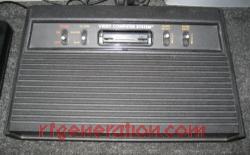
Back in the 1970s, in a time when video games began to increase in popularity after the success of games such as Pong, companies, such as Atari and Magnavox released home versions of the game. Then, Atari's engineers designed a way to play video games at home via cartridges, making it possible for home gamers to own one system, but play many different games. Finally, in October 1977, Atari released the Atari Video Computer System, or Atari 2600. The system didnt become an instant success until around 1978, when Atari gained the rights to the game Space Invaders, and ported it to the 2600, becoming the world's first ever ported arcade game.
Now, like many of you on the site, along with me, consider the Atari 2600 to be one of your favorite video game systems. Many of you may remember the hours you spent in front of your tv playing favorites such as Missile Command, Asteroids, Pitfall!, Berzerk, Combat, Centipede, and Ms. Pac-Man.
Looking at the system, you see that the system is very simple, despite the number of switches on it. Originally, the first run of Video Computer Systems came from the Sunnyvale, California plant with black plastic, a woodgrain front, and six switches. The weight of the system and the number of switches on the front, the early run of the systems became known as the "Heavy Sixer." As time went on, Atari continued to downsize the system. Some revisions were a 6 switch with less weight (Light Sixer), woodgrain front with 4 switches (4 switch woody), and an all-black 4 switch model (the Darth Vader model).
Another good point of the system was the controller. It remains today as one of the simplest controllers for a video game system. The controller is simply a joystick and one button. The other controllers made for the system are the paddle controllers and the driving controller. The paddle controller is a simple spinning knob made for pong and breakout style games. The driving controller was the same as the paddle controller, but the paddle is a continuous 360 degree spin. On top of this, literally hundreds of third party controllers were designed and released for the system.
As the 80s came around, more arcade games made more possibilities of ports for the 2600. Unfortunately, these were also the years when the 2 worst 2600 games were released. First off was the 2600 port of Pac-Man. The biggest problem with the game was the fact that it looked nothing like the original arcade game. This was because of the fact that when Todd Frye, programmer in charge of the game, presented the prototype, Atari released the prototype. Millions bought the game and were extremely disappointed. The other game is the infamous E.T. The Extra-Terrestrial. The game was so bad that the 5 million unsold copies were buried in the New Mexico desert.
In the mid 1980s, fierce competition came from companies such as Nintendo, causing people to begin to abandon the 2600. At this time, Atari redesigned the 2600 as the new Atari 2600 (called the Atari 2600 Jr.), with a new "The Fun Is Back" campaign. This boosted sales of the 2600 for a few years. Finally, Atari discontinued the Atari 2600 in around 1992
As you can see from this review, the Atari 2600 has had a very long and exciting history. As of late, popularity of the 2600 has exploded, and fandom of the system is alive and well. Recently, homebrewers have began creating and releasing brand new Atari 2600 games, via Atariage. http://www.atariage.com/store/ (link to the atariage store)
Even though I wasn't even born when the system was out, it has become one of my highest rated video game systems. This one deserves a perfect 10/10.
I am seeing that Chrono Trigger on the DS is a port of the original SNES RPG with new touch screen features in the game. I also have a lot of the fans of the game on this site saying that it is a game that I have got to play. So I'm wondering...should I use this game to experience the game, or should i just track down the cart version for the SNES. It seems easier to just get the DS version. What do some of you think?
In 1989, at a time when the NES was increasing even more in popularity, Sega, who already had some popularity in the United States with the 8-Bit Master System, and Arcade games such as Altered Beast and After Burner II, released a video game console that was meant to take on Nintendo's NES, the Genesis, which became one of the greatest 16-Bit consoles of all time.
At the time of it's release, Sega's main success was in the arcades, and overseas in the UK, where the Master System was extremely popular. On October 29, 1988, Sega release the MegaDrive in Japan. About a year later, on August 14, 1989, Sega release the Genesis in the United States. Sega pushed the Genesis on American consumers with the classic "Genesis does what Nintendon't" commercials. Those who paid the money for the system got the system, controllers, hookups, and the arcade port of Altered Beast. Many of the games released at launch were arcade ports and sports games. These include: Strider, Pat Riley Basketball, James "Buster" Douglas K.O. Boxing, and Michael Jackson's Moonwalker. The graphics of the system made people question why they were still playing on the old 8-Bit NES. Some kept their Nintendo's, and some took the leap into the 16-Bit era. Early in the Genesis' lifetime, Sega released a peripheral for the system called the Sega Power Base Converter. This peripheral slid into the cartridge port of the system an allowed the user to insert Sega Master System games into the converter, giving it backwards compatibility with practically all Master System games, and game Cards.
As the years went on, the Genesis saw some fierce competition coming from Nintendo, with their Super Nintendo Entertainment System, and NEC's TurboGrafx-16. Sega held on, however, and gained even greater popularity with the release of the game Sonic the Hedgehog. Sonic was, as most today know, a blue, bad ass, in-your-face hedgehog, and was much more fierce when compared to Nintendo's little Italian plumber, Mario. Also, Sega was able to beat out Nintendo with one fighting game, Mortal Kombat. While the Genesis version of the game didn't look as good or sound as good as the SNES version, the Genesis version had full blood, and no censored fatalities.
As the Genesis passed into the 32-Bit era, Sega tried to keep up with the graphics of the more advanced systems. They began to push the games to their graphical limits, and even released a couple of add-ons to make the system more powerful. The first of the two was the Sega Mega CD, released in Japan in 1991, and released in the United States in 1992 as the Sega CD. As the name states, this add-on was a disc drive that attached to either the bottom of the model 1 Genesis or on the side of the model 2. The add-on also enabled the Genesis to play audio CDs. Most of the games on the Sega CD were crappy FMV (full motion video) games. Some of the better ones, however, were Sonic CD, Snatcher, The Terminator, and Mortal Kombat. Mortal Kombat on the Sega CD featured the same Genesis graphics, but arcade sounds, speech, and music. Later on, in 1994, Sega released the Sega 32X, which was inserted into the cartridge port of the Genesis, could play all of the regular 16-Bit games, and also had its own line of 32-Bit games such as Mortal Kombat II, Knuckle's Chaotix, Star Wars Arcade, Doom, and Virtua Fighter. These add-ons are infamous for their low amounts of killer titles, and extremely high prices at launch.
In closing, Sega made their greatest benchmark on the video game industry with the Genesis, and many gamers of today swear by the old Blast Processor. This system gets a 8/10.
On August 13, 1991, 4 years before the discontinuation of the NES, Nintendo released the new 16-bit Super Nintendo Entertainment System, in North America. The system was already widely available in Japan under the name Super Famicom, when it was released there on November 21, 1990. This system promised to further Nintendo's domination and popularity in the video game market.
Because the system came after the NES, it was launched with the sequel to Super Mario Bros. 3. Of course, that game was Super Mario World. The game itself practically sold the system. The SNES also offered continuations of NES favorites such as The Legend of Zelda, Mega Man, Double Dragon, Battletoads, etc. Also, some sets of the SNES came packaged with Super Mario All-Stars, which was a compilation cartridge that had the NES games Super Mario Bros., Super Mario Bros. 2, Super Mario Bros. 3, and Super Mario Lost Levels in better 16-bit graphics and sound.
The console itself is pretty plain-jane. It was very boxy, with a standard Power, and Reset button. The console does, however, have an eject lever on it allowing the player to simply press down on the lever to pop the cartridge out of the console, as it is a top loading system. That is good because the games get firmly seated onto the pins and would just about always boot right up. On the front of the console, there are the standard 2 controller ports. The bottom has an expansion port on it, but was very rarely used, and the back, of course, has the AC, RF, and AV ports.
The controllers, are a huge step op from the NES controllers. They have rounded sides, a d-pad, 4 face buttons, and 2 shoulder buttons. The shoulder buttons were a new thing back then, but are now a standard on video game controllers. The 4 face buttons were arranged in a fashion like this:
X
Y A
B
The controllers are very comfortable, and very responsive. The buttons are arrange perfectly for games like Mortal Kombat.
In 1994, Nintendo release a new SNES game that kicked the Super Nintendo's popularity into overdrive. That game was Donkey Kong Country. This game had some of the greatest graphics and gameplay of any SNES game. The game sold more consoles and millions of cartridges. In the last 45 days of 1994, the game sold 6.1 million copies, making it the fastest selling video game to date. There were even 2,500 competition cartridges released. The game was followed up with Donkey Kong Country 2: Diddy's Kong Quest, and Donkey Kong Country 3: Dixie Kong's Double Trouble.
As with the NES, in October 1997, Nintendo released the SNES 2, a smaller and lighter version of the SNES, with Super Mario World 2: Yoshi's Island packed in with the system for only $100. The things removed were the expansion port, RF port, and eject button. The power and reset buttons were confined to the left side of the system. Finally, on November 27, 1997, the last first-party SNES game, Kirby's Dreamland 3 was released and the SNES was discontinued in 1999.
Games from the SNES library continue to live on through different systems. Many of the games, such as Super Mario World, and Donkey Kong Country, were ported to the Game Boy Advance, and many of the Super Nintendo's games are available for download on the Wii's Virtual Console. The SNES also has a huge emulation scene, as virtually every game is available for download to be used on an emulator.
As you have seen, this console was a favorite of 1990s era gamers, and was the first game console that i ever played. I can remember the countless hours that I spent playing Super Mario World, Super Mario All-Stars, and Donkey Kong Country. Many gamers probably have those fond memories, too. Well, again, this one deserves a 10/10.
In the early to mid-1980's, the North American video game market began to severely decline. Too many companies tried to make a quick buck with their own video game systems, like the Fairchild Channel F, and the Bally Astrocade. Also, the software companies began to just put out basically shit to keep up, for example, Atari's E. T. The Extra Terrestrial. After this, the market plummeted sharply and completely crashed in 1983. The North American video game market would not recover from this crash for 2 years.
Then, in 1985, a small, unknown Japanese company called Nintendo, decided to bring their Family Computer (also called the Famicom for short), video game system to our shores. The system was re-branded and re-tooled as the Nintendo Entertainment System. Because the original run of the system came with the R. O. B. (Robotic Operating Buddy), the system was seen as, not just another video game system, but a robot gaming system, as the robot was used to play games with you. Also, the system was also a video shooting gallery, as 2 of the set variations came with the game Duck Hunt. The graphics and sound of the system were unparalleled for the time, and the games on the Atari systems gave way to games that could actually be completed, such as the Super Mario series, Mega Man, and Contra, just to name a few. Because of these things, the system was an instant success, and the North American video game market was going strong once more.
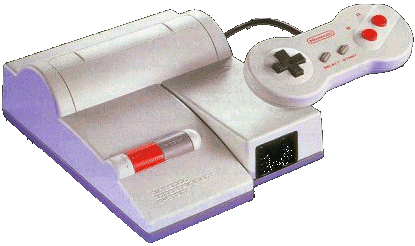
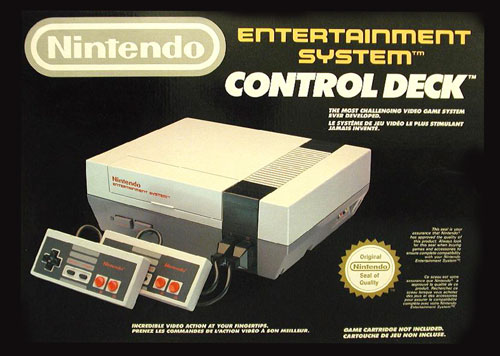
This system was also the first to have different sets of systems with different included accessories. The ones made were the Deluxe Set, Action Set, Challenge Set, Control Deck, Sports Set, and Power Set, and finally, the Control Deck, with the NES 2.
Here are the different sets, by year of release
NES Set Variations
Deluxe Set-1985-System, hookups, 2 controllers, R. O. B., Zapper, Duck Hunt, Gyromite
Control Deck-1985-System, hookups, 2 controllers, Super Mario Bros.
Basic Set-1987-System, hookups, 2 controllers, The Official Nintendo Player's Guide (does not include game pak.)
Action Set-1988-System, hookups, 2 controllers, Zapper, Super Mario Bros./Duck Hunt
Power Set-1988-System, hookups, 2 controllers, Zapper, Power Pad, Super Mario Bros./Duck Hunt/World Class Track Meet
Sports Set-1990-System, hookups, NES Satellite, 4 controllers, Super Spike V' Ball/Nintendo World Cup
Challenge Set-1990-System, hookups, 2 controllers, Super Mario Bros. 3
Control Deck-1993-NES 2 System, hookups, 2 "Dogbone" controllers. (does not come with game pak).
As the years went on, the NES began to be rivaled by newer, more powerful systems, such as the Sega Genesis in 1989. Still, the system continued to thrive, all the way into the 16-bit wars. The final set was the control deck, consisting of the top loader, and 2 dogbone controllers, and the final game, Wario's Woods, was released in 1994, and was the only NES game to have an ESRB rating.
After all was said and done, the Nintendo Entertainment System sold close to 62 million units, with the best selling games being Super Mario Bros. (40 million units sold), and SMB3 (18 million units sold). For many gamers in the 1980s, this was their first and possibly their favorite system of all time. Although I did not grow up in the 1980s, I own an NES, and would not give it up for the world. This one also gets a 10/10.
Ahh, what can be said about the original Game Boy, that hasn't been said a million times before? This one handheld, released in 1989, completely revolutionized the handheld video game market. Before the Game Boy was released, there were literally hundreds of different kinds of handhelds, but they were the cheap, lcd screened systems that you would find in small discount stores.
At first glance, the Game Boy does not seem like much, but when you pop in that Game Pak and boot on the system, you know that it is more than you expected. The Game Boy is vastly more powerful than lcd handhelds, and will probably last longer (which is true, seeing as how there are some from '89 that are still working flawlessly). The system is instantly easy to use for any gamer who grew up playing the NES, as the controls are exactly the same as those on the NES controllers. Another thing, the system has a screen, but is green for some reason. This was also the first handheld that was able to link up to multiple Game Boys to play multiplayer games.
Nintendo made the perfect choice to secure the rights to Tetris as the system's pack in game. This meant that anyone that bought a Game Boy had a game that they could play right away. Tetris was obviously not the only game on the system, as Nintendo made sure that all of the NES favorites were available to be in your pocket (game such as Super Mario,
Donkey Kong, Metroid, Tetris, Mega Man, TMNT, and newcomers such as Kirby).
As you can see, this is only a brief overview/review of the game boy. It may seem very old and very outdated by today's standards, but will always live on in the hearts of classic gamers as one of their favorite systems of all time. This one gets a perfect 10/10
Well, any classic Nintendo NES fan will know that, like other consoles, the NES has its own number of sports games, such as Slalom, and 10 - Yard Fight by Nintendo. There are even games from third parties such as Tecmo's Tecmo Bowl and Super Bowl. One in particular, Ice Hockey, is the one that I will be reviewing here. Starting off, you will notice the cartridge and box art are different than most Nintendo sports titles. Most come in the black boxes that we've all seen at one time or another. Strangely, Ice Hockey comes in a bright blue box with a picture of some random ice hockey player. This is the only Nintendo sports title that hasn't had the cartoony style characters on the box and cart.
Now, as you first boot up the game, you are treated to some quite cheerful music and some small hockey players on the screen. Like most NES games, Ice Hockey has the option of either 1 or 2 players. As you press start on the controller, you get a screen of several options. On this screen, you get to choose your team (USA, Canada, Russia, Czechoslovakia, Sweden, and Poland), your opponent's team, the speed of the game, and the length of the game, ranging from 7, 10, and 15 minutes. The last thing that you will set up before the game begins, is the setup of your team. You choose which type of players will be on your team. Once all of the options are selected, the match can begin.
As the game begins, you will start out at center ice to battle for the puck. The gameplay mostly relies on being able to pass the puck, shoot, and how you selected your team. From the get-go, none of the teams have a statistical advantage over the others. Before the game, each team has five players (a stocky player, 2 average players, and a skinny player). The stocky players are the best at shooting and bowling over other players (which is pretty entertaining), the average players are average all around, and finally, the skinny ones are the fastest but tend to be the ones that get bowled over the most often. Also, each team has a goaltender as well. The controller only controls the player that is selected, but it will also control the goaltender no matter which one is selected. Fights can also ensue, and will continue until the ref stops it and sends the starter to the penalty box. Goals can be kind of hard to achieve at times, but when you do score one, it is damn satisfying! One other thing to note is that, when the game is paused, the pause sound is the same pause sound from Super Mario Bros.!
As you can see, this is one of the greatest sports titles to be released on the NES, and is personally one of my favorite nes games of all time. I'll give this game a 9/10
Now this is a review on Mortal Kombat that this guy, Sizzler07 on youtube did. This has got to be the worst video game review of a video game that ive ever seen! I dont even think that he has even played the game before he turned the camera on himself! He says that the game shouldnt have ever been ported from the arcade. He also has done a Contra review that was even removed because he bashed the game so heavily that people were creating so many video responses and flaming his review. The MK review pissed me off so badly, and it may even piss off some of the most hardcore MK fans. Anyway, just watch it.
This game will just about get a horrible review anywhere you go. The controls are crappy in the rally races, and even worse when you get to the side-by-side races! In the rally races, the controls are pretty straightforward (A - Accel. B - Special Weapon; Left/Right - Steering; Up - Nitro). When you get to the side-by-side races, the controller is just too damn hard to use. I swear that the people that made the game (Acclaim), must have thought that they needed to use every damn button on the controller, with the exception of the start and select buttons. You have to use the B button for Gas, and the A button for the Transmission Shifting. At the same time that you are accelerating and shifting, you have to simultaneously press left and right on the d-pad to get the damn monster truck moving!
Also, between side-by-side races (which consist of Mud Race, Pull-Off, Car Crunch, and 1 drag race in the last race of the game), you have to use the money that you start with and the money that you earn from winning other races and rallies to buy parts for your truck.
And one of the worst things is what happens with the CPU opponent. When you start the game, you play as the driver of Bigfoot up against a green truck called the Growler. Both the P1 and CPU start with 5000 dollars. If at any point the Growler runs out of money and then crashes in a rally, the game ends for that truck. But, they will automatically put in a new truck that is yellow, called the Charger.
The shit of that is the fact that they give the truck 5 grand, AND doesnt have to buy any new parts for the other races. Now i got the game, simply cuz im a Monster Truck fan, but i CANNOT play this game for more than 5 minutes before i get pissed off and have to turn it off!
I have to say that this game has got to be one of the worst games in the NES library. I cannot find even one redeeming quality about it.
I was just playing Super Mario Bros. on my NES about id say about 15-20 minutes ago, and something truly screwed up happened. Now just about everyone on this site knows of the classic 99 lives, turtle shell hopping trick, in world 3-1. Well i was playing and pulled off the trick about, id say, at least 15 times until the time ran out. Then i came back and did it for another 10 times, then just finished off the level. I started up level 3-2, didnt get too far, and then fell off of a platform and died. Then somehow, i got a fucking GAME OVER! Now how in the world did i get a game over?!?!?!? I had to have had at least 60 or 70 lives left! Is there something wrong with the trick or did something just fuck up? Has anyone else ever experienced this?
Now i realize that there are probably hundreds of thousands of gamers my age in high school, but I think that i am a big exception to all of em. Now most of my friends that are my age are the guys that have the PS3, 360 or Wii, especially my best friend, who has a Wii and 360. i am not like any of them. Most of my friends think that i am strange because the most current console that i have is an old xbox. But i actually dont care for most of the next-gen games. In my room, i have the old games. Even my xbox collection has 4 of the games that have 20 or more old skool games. The systems i prefer to play are the Atari 2600, NES, SNES, and Genesis. I mean, i grew up playing the 16-bit games. I grew up playing the SNES and Genesis. I grew up with games like Super Mario World, Super Star Wars, Super Mario All-Stars, and DKC. And strangely, as i got older, i was introduced to 8-bit systems. I first played the NES when i was 8 years old, and back during the winter, my dad gave me his 2600 stuff that he had at the time. It has then since grown by about 20 or 30 games since then. And also, 1 year ago, i bought my own NES. Now my NES and 2600 collections combined have over 100 games.
|
|